


Here is where I stand on the Issues
This page lays out where I stand on the issues that matter most to our community—from affordability, education, and healthcare to civil liberties, the environment, and good governance. It’s a clear, plain-language look at my policy positions, the values that guide them, and how I think about solving real problems with an eye toward dignity, accountability, and the long term.
Welcome. This page is long on purpose.
Democracy should not require guessing. You deserve to know who I am, how I think, what I believe, and how those beliefs translate into policy— not in slogans, not in sound bites, but in plain language and full context.
I’m running for the Utah House because I believe government should solve real problems, steward shared resources, and protect human dignity— not wage symbolic culture wars, enforce ideological conformity, or serve insiders at the expense of everyone else. Governing is a responsibility, not a performance, and the people we elect should be willing to show their work.
That perspective comes from my background. I spent more than a decade serving in the Air Force and the Utah Army National Guard in public affairs as a military journalist, photographer, media liaison, and strategic communicator— translating complex policy and institutional decisions into language the public could understand. That experience taught me that words matter, clarity matters, and trust is built through transparency and accountability.
Outside the military, my training is in broadcast, journalism, and communications. Writing has always been how I make sense of the world. Over the last twenty years, I’ve written thousands of pages— blogs, essays, advocacy documents, policy papers, and long-form reflections on politics and governance. That work reflects lived experience, research, organizing, and time spent inside real systems trying to make them work better.
That writing turned into policy action. I helped draft Proposition 2 and the Utah Medical Cannabis Act, navigating patient advocacy, public health, and regulatory design while keeping the focus on dignity, access, and evidence-based care.
My advocacy has also included sustained leadership on veterans issues. I served multiple terms as chair of the Salt Lake County Democratic Veterans Caucus and three terms as co-chair of the State Democratic Veterans Caucus, working directly on veterans policy, legislative advocacy, and accountability. That work showed me how laws are shaped, how systems fail, and how persistent advocacy becomes real change.
In 2020, I also served as a co-lead for the Utah for Pete Buttigieg campaign— a locally built grassroots effort grounded in clear values, serious policy conversations, and respect for voters’ intelligence.
All of that work forms the foundation for this page. These are my words. These are my beliefs. These are positions grounded in lived experience and years of engagement— not something assembled for a single campaign cycle.
I often describe myself as a Star Trek liberal— not out of fandom or nostalgia, but because I believe in a future worth building. A future where human dignity comes first, where society invests in people, and where “Infinite diversity in infinite combinations is our strength.”
A society that accommodates difference is more resilient, more innovative, and more humane. A government that respects the full diversity of human experience governs better. That principle shapes the positions below— from education and healthcare to housing, labor, civil liberties, and long-term stewardship of our shared future.
This page is long because I trust voters enough to go deep. Nuance is not a weakness. Complexity is not something to hide from.
If you’re still reading, I’m glad you’re here.


Use of military rank, job titles, photographs in uniform, and references to military service does not imply endorsement by the Department of Defense, the Department of the Air Force, the Department of the Army, the National Guard, or any military service branch.

Who I am and how I see the role of government
I’m Drew Howells— a veteran, an advocate, and someone who has spent years working in and around complex systems like government, healthcare, housing, energy, and public policy. I’ve seen how decisions made far from public view land on real people, and how those consequences are too often ignored by the people with power.
My politics are not rooted in tribal identity. They’re rooted in observation— in watching how systems fail when they are designed for abstraction instead of reality, and how people fall through cracks that were never accidental.
I believe leadership is stewardship. We are temporary caretakers of institutions that must outlast us. The job is not to dominate, but to leave behind systems that function, adapt, and earn trust.
That requires humility. Curiosity instead of fear. Evidence instead of ideology. And a willingness to plan beyond the next election cycle.
Use of military rank, job titles, photographs in uniform, and references to military service does not imply endorsement by the Department of Defense, the Department of the Air Force, the Department of the Army, the National Guard, or any military service branch.
A governing philosophy grounded in democracy and restraint
Democracy is not a branding exercise. It is a living system, and it has to be maintained on purpose.
When the Legislature overrides ballot initiatives, pulls power away from local communities, governs through secrecy, or treats public input like an inconvenience, it erodes legitimacy. When lawmaking becomes performance instead of problem-solving, trust collapses.
I believe in restoring a normal legislative order— open debate, transparent process, real fiscal analysis, and laws written to endure rather than provoke. Not every social anxiety needs a statute. Not every cultural disagreement should be settled through state power.
A pluralistic society does not require agreement. It requires boundaries. The boundary I govern by is simple: the state exists to protect rights, steward shared systems, and serve the public— not to enforce a worldview.
That is how you govern a place made up of infinite diversity in infinite combinations.


Education, literacy, and public schools
Education is the single most important investment a society can make. Literacy is the foundation everything else depends on— economic mobility, civic participation, workforce readiness, and the ability to think critically in a world full of noise, manipulation, and bad faith.
Utah’s real education crisis is not what books exist in libraries. It is that far too many of our students are still not reading at grade level. That reality should reshape our priorities. If lawmakers claim they are acting “for the kids,” then literacy outcomes— not censorship, not culture war theater, and not moral panic— should be where the focus begins.
I support fully funding public schools, expanding early literacy efforts that actually move the needle, empowering teachers and librarians as the professionals they are, and measuring success by whether students are learning— not by how many symbolic fights politicians can manufacture for social media and campaign mailers.
I’m honored to have earned the endorsement of UEA-PAC, because I take public education seriously. I believe in supporting the people doing the work, respecting professional expertise, and building schools that prepare students not just to pass tests, but to understand the world they are inheriting and fully participate in public life.
A society that believes infinite diversity in infinite combinations is our strength must invest in education systems that give every child the tools to read, reason, and thrive. A state that cannot read cannot compete, cannot innovate, and cannot govern itself effectively.
Libraries and intellectual freedom
Libraries are civic infrastructure. They are community anchors, knowledge commons, and engines of opportunity. For generations of kids— myself included— they were places where curiosity was encouraged and where knowledge opened doors that the world around you might not.
I’m part of the Reading Rainbow generation. I grew up in a culture that understood something simple but powerful: books are not something to fear. Knowledge is power.
Unfortunately, Utah’s libraries have been dragged into a manufactured culture war. My opponent, Ken Ivory, has been one of the key architects behind the state’s book ban efforts— turning libraries into a political battlefield instead of the refuge for learning and discovery they are meant to be.
And the truth is, this fight was never really about books.
Utah’s real education crisis is that roughly half of our students are not reading at grade level. Yet the loudest voices in the Legislature are spending their time banning books that are far beyond the reading comprehension of most of the students they claim to be protecting. That contradiction tells you everything you need to know. This is not about literacy. It is about political theater, culture war division, and the erasure of communities some politicians would rather pretend do not exist.
Libraries should not be weaponized this way. I oppose book bans because access to information is foundational to a free society. Parents absolutely have the right to guide what their own children read. That is normal. But the state has no business acting as a moral gatekeeper over ideas or narrowing the intellectual world available to everyone else.
Pluralism requires access to ideas, not enforced conformity. Protecting libraries means protecting intellectual freedom, protecting curiosity, and protecting the civic spaces where people of every background can learn, explore, and imagine a bigger future.
Protecting libraries is, ultimately, about protecting democracy itself... "but you don't have to take my word for it!"

Housing affordability and local control
Utah is facing a real housing affordability crisis. Housing touches everything— family stability, mental health, workforce mobility, and whether the next generation can realistically build a life in the communities they grew up in.
I reject the false choice between growth and community. Good housing policy has to be locally informed, infrastructure-aware, and centered on people rather than speculation. Housing should be homes first and investment vehicles second.
I support expanding missing-middle housing, allowing accessory dwelling units, strengthening reasonable renter protections, and encouraging smart density where it makes sense— especially near transit, jobs, and services. These are practical tools that help communities grow without pricing out the very people who keep them running.
Local control matters. Communities deserve a real seat at the table when shaping how their neighborhoods evolve. But local control cannot become a synonym for exclusion, and statewide coordination cannot become a synonym for state domination. The role of the state should be to set fair guardrails, invest in infrastructure, and make sure the system works for everyone.
A diverse state needs flexible housing options that reflect diverse lives. One rigid housing model cannot serve infinite combinations of families, incomes, abilities, and stages of life. If Utah wants to remain a place where people can put down roots, raise families, and build stable lives, we have to start treating housing like essential infrastructure instead of a luxury commodity.
Homelessness, dignity, and public safety
Housing and homelessness are the same pipeline viewed at different points in time. Housing affordability is the upstream pressure. Homelessness is what happens when that pressure finally breaks for people with the least margin for error— seniors on fixed incomes, disabled residents, veterans, families crushed by medical debt, young people priced out of a first apartment, and people fleeing domestic violence with nowhere safe to land.
My position starts with two simple premises.
Homelessness is not a crime.
You do not solve it through punishment.
I reject containment models that warehouse people out of sight and call it compassion. I reject the idea that we can sweep human suffering behind a fence, force people into detention because they are poor, or criminalize the condition of being unhoused and pretend that is public policy. It isn’t. It is our moral failure dressed up as order.
I believe we have a moral obligation to care for the least of these among us— to feed the hungry, clothe the naked, shelter the vulnerable, and remember that human dignity does not disappear just because someone has lost housing. That is not only a religious value. It is a civic one. A decent society does not measure people’s worth by how comfortable they make everyone else feel. It measures itself by whether it builds systems that catch people before they are broken beyond repair.
Poverty in a wealthy society is not an inevitability. Hunger is not inevitable. Mass homelessness is not inevitable. These are the downstream consequences of policy choices— what we fail to build, what we refuse to fund, and what we decide to tolerate. If we are serious about public safety, then we need to be serious about stability. Stability is what lowers disorder. Stability is what reduces crisis. Stability is what gives people a path back.
That means prevention first— rental assistance, eviction prevention, domestic violence support, mental health care, addiction treatment, and targeted help for people before they lose everything. It means housing-first approaches that get people into stable shelter and pair that housing with the services they need. And it means rejecting all plans that rely on involuntary detention simply because someone is unhoused.
Public spaces should be safe. Businesses should be able to function. Families should have parks, sidewalks, and neighborhoods that feel secure and usable. Those are real needs. But the question is how we achieve them. We do not get there by multiplying trauma, deepening instability, and turning poverty into a quasi-criminal status. We get there by building exits instead of traps.
A society that truly believes infinite diversity in infinite combinations is our strength does not discard people when they become inconvenient. It recognizes that every person is still a person, every neighbor is still a neighbor, and every community is stronger when it chooses restoration over abandonment.
That is the kind of public safety I believe in— one rooted in dignity, evidence, prevention, and the hard work of making sure fewer people fall through the cracks in the first place.

If what you’re reading here resonates, I’d invite you to help keep this work going. True grassroots, non-establishment campaigns don’t survive on big donors or party machinery—they survive because regular people decide this kind of politics is worth backing.
If you believe in this vision and want to help turn it into real representation,
please consider donating $39.39
for Utah House District 39
And if you’re able, making it a recurring monthly contribution is one of the most powerful ways to sustain this campaign over time.
You can click the link below or scan the QR code to donate securely through ActBlue.
Every contribution, especially small-dollar recurring ones, helps keep this campaign independent, accountable, and rooted in the community.


Transportation, mobility, and access
Transportation policy is housing policy, labor policy, air quality policy, and disability policy. The way we design movement through our communities determines who has access to opportunity and who gets left behind.
Infrastructure should be designed around people, not just cars or ribbon cuttings. Good infrastructure expands freedom. It determines whether someone can get to work, whether a senior can reach a grocery store, whether a person with a disability can navigate their own neighborhood, and whether families are spending their income on opportunity or on the rising cost of simply getting around.
One of the people who has long inspired me in this space is Walt Disney. Not just as a storyteller, but as a planner and builder. He had the ability to dream beyond what seemed possible and then work to make it real. His idea of imagineering— pairing imagination with engineering— was ultimately about designing whole systems for how people live. Transportation, housing, energy, shopping, public space, and the daily needs of life all had to work together. That kind of long-range master planning matters, because communities do not function well when every part is designed in isolation.
That is one of the central failures of how we often approach growth in Utah. Transportation, housing, infrastructure, and access to daily necessities are all interconnected. When we fail to plan them together, we create long commutes, rising household costs, worsening air quality, and neighborhoods where basic needs are too far away. We create food deserts where grocery stores are not accessible. We create communities where people are trapped by distance and car dependency. That is not thoughtful growth. That is drift.
I support major expansion of UTA, TRAX, and FrontRunner, including moving toward 24-hour service.
We need to think about third shift. We need to think about overnight workers. Nurses, hospital staff, first responders, service workers, warehouse workers, and countless others keep Utah running long after midnight, and public transportation should work for them too. A serious transit system does not shut down at midnight and barely function on weekends.
If we want public transportation to be a real alternative, then it has to be reliable, frequent, and available when people actually need it. That means more routes, more lines, better frequency, and service hours that reflect the reality of modern life rather than an outdated nine-to-five model.
This is not just about convenience. Utah is projected to roughly double its population by 2050. We do not have the infrastructure for every household to depend on two or three cars just to survive. That is not sustainable for our roads, for our air quality, for household budgets, or for the long-term livability of this state.
Walkability, bike safety, and maintenance matter too. Safe sidewalks, protected bike routes, and well-maintained streets are not extras. They are part of a transportation system that gives people multiple ways to move through the world safely and independently.
A society built on infinite diversity in infinite combinations needs multiple ways to move through the world. The goal of transportation policy should not simply be moving cars faster. It should be building communities where people can live, work, shop, and connect in ways that are sustainable, accessible, and designed for the future ahead of us.
That is the kind of planning I believe in— the kind that helps us build a great big beautiful tomorrow on purpose, instead of stumbling into a future we were too shortsighted to prepare for.
Air quality, environment, and the Great Salt Lake
Clean air is not a luxury. It is a basic right. It is inseparable from public health, quality of life, and whether people can actually thrive in the place they call home.
Utah’s air quality problems are not abstract. Families feel them every winter when inversion settles into the valley. Kids with asthma feel them in their lungs. Workers breathe them on job sites. Seniors and people with underlying conditions pay the price first. That is why I treat air quality as a public health issue, not an acceptable tradeoff and not some minor inconvenience we are supposed to normalize.
That means cleaner energy, smarter transportation planning, and holding major polluters accountable instead of shifting the cost of dirty air onto families. Sick communities are not a sign of prosperity. They are a sign of failed stewardship.
And nowhere is that failure more dangerous than at the Great Salt Lake.
The Great Salt Lake is not just scenery. It is a keystone system for the Wasatch Front. As the lake declines, more playa is exposed, dust risk increases, and the danger to public health, ecosystems, snowpack, and the regional economy grows with it. Exposed lakebed dust can contain arsenic and other metals, and the risk to public health becomes more serious the more of the lake we allow to disappear.
This is not hyperbole, and it is not some environmentalist ghost story. We have seen what happens when a great inland lake is allowed to collapse.
The Aral Sea is one of the clearest warnings in modern history. As it dried, the exposed seabed became a major source of salt and toxic dust storms that damaged public health, degraded soil and air quality, and disrupted local economies across the region. Governments and international institutions are still spending enormous resources trying to stabilize and restore what was lost. That is what makes lake collapse so dangerous: once you let a system fail at that scale, undoing the damage becomes vastly harder and vastly more expensive.
The lesson is not that Utah is doomed. The lesson is that collapse is not theoretical, and prevention is far cheaper than trying to rebuild after the damage is done.
It is not too late to change course. But the window is not infinite, and half-measures are not going to save the lake. I support aggressive conservation, smarter water use, agricultural efficiency reforms, and long-term planning aligned with hydrological reality rather than political convenience. And I am open to ambitious, even unconventional solutions, because the scale of the problem now demands serious thinking instead of incremental gestures. The status quo is the most radical and dangerous option of all.
Stewardship means recognizing limits. Growth that destroys the natural systems it depends on is not progress. It is a countdown.
If we want a livable Utah for the next generation, then saving the Great Salt Lake has to be treated like what it actually is: one of the most urgent public health, environmental, and economic responsibilities we have.


Energy policy and the future economy
Energy policy is not just about keeping the lights on today. It is about whether we have the vision to build the power infrastructure Utah will need for its 22nd-century future.
I believe we need to start planning now for a state that is more populated, more technologically demanding, and more interconnected than the Utah we inherited. That means thinking bigger than the next rate case, the next election cycle, or the next ribbon cutting. It means building an energy system that is reliable, affordable, resilient, and designed to serve the public over the long haul.
My approach is an all-of-the-above strategy grounded in realism and long-term planning. Utah should be accelerating renewables like solar, wind, and geothermal, investing in storage, modernizing the grid, and evaluating emerging technologies transparently and responsibly. I am open to serious conversations about new technologies, including advanced nuclear options, but I want those conversations rooted in safety, public accountability, and actual cost-benefit reality— not hype, not ideology, and not backroom decision-making.
The key word here is resilience. A healthy energy system does not put all of its eggs in one basket. It embraces diversity in sources, technologies, and delivery systems, because that is how you reduce fragility. A grid with multiple ways to generate and distribute power is stronger, smarter, and better prepared for the future than one built around a single dominant model.
But energy policy is also about governance. Utilities exist to serve the public, not primarily to extract profit for distant shareholders. Some systems are too essential to be treated like just another revenue stream. Our power infrastructure should be planned and operated with the public good in mind— reliability, affordability, sustainability, and long-term stewardship— not quarterly returns for people who may never set foot in Utah.
That matters even more as power demand rises. If large corporations want to build massive data centers or other high-demand facilities here, they should pay their fair share. They should pay the real cost of the power and water they consume, and they should help fund the infrastructure upgrades their presence requires. Utah families should not be forced to subsidize corporate growth through higher utility bills or resource strain. If these companies want to benefit from our communities and our infrastructure, then they need to invest in them too.
I also believe energy policy is economic policy. The choices we make now will shape whether Utah becomes a leader in innovation, resilience, and future-ready infrastructure, or whether we fall behind while pretending the old model can last forever. Building the grid of tomorrow means creating jobs, supporting research and development, improving reliability, and positioning Utah to compete in a rapidly changing economy.
This is where imagination matters. I think a lot about the idea of imagineering— the discipline of pairing vision with engineering, dreaming with doing. Utah does not need small thinking when it comes to energy. We need to think like builders. We need to ask what kind of state we want to hand to the next generation, and then start designing the systems that can actually sustain it.
That is what I mean when I talk about building a great big beautiful tomorrow. Not empty futurism. Not shiny slogans. Real infrastructure. Real resilience. Real planning. An energy system worthy of the future ahead of us.
Healthcare, medical autonomy, and public health
Healthcare is foundational infrastructure. Access to care is a matter of human dignity, not purchasing power. A society that treats illness like a financial test, or medical care like a luxury product, is not efficient. It is cruel, unstable, and ultimately more expensive for everyone.
My approach to healthcare is patient-first, outcomes-driven, and grounded in reality. That means investing in preventative care, enforcing true mental health parity, expanding rural access, supporting evidence-based treatment, and embracing harm reduction strategies that save lives. Addiction is a medical condition, not a moral failure. A humane system meets people where they are instead of waiting for them to collapse before offering help.
Medical decisions belong between patients and qualified professionals, not politicians. That principle has guided my work from the beginning, including helping draft Proposition 2 and the Utah Medical Cannabis Act. Patients deserve real choices, real access, and care rooted in science and compassion rather than ideology or political theater.
But access is only part of the problem. Cost and bureaucracy are two of the most brutal forms of denial in American healthcare. Too many systems are designed to confuse, delay, and extract. Opaque hospital pricing, predatory billing practices, and pharmacy benefit managers inflating drug costs through layers of middlemen all drive up prices while patients are left navigating a maze just to get basic care.
One of the least discussed but most important reforms we need is true healthcare data interoperability. Interoperability is not a technical nice-to-have. It is the foundation of a functioning, patient-centered healthcare system. Today, health data is fragmented across providers, insurance companies, hospital systems, and digital platforms. When that information cannot move seamlessly, patients are forced to coordinate their own care, doctors make decisions without a complete picture, and costs skyrocket through duplicated tests and administrative friction.
Patients should own their medical information. It should move securely with them wherever care occurs. True interoperability would make healthcare more efficient, improve outcomes, and allow innovators to build tools that actually help patients navigate the system. Instead, too many corporations profit from keeping data locked inside proprietary systems that treat patient information as a commodity rather than a public good. That leaves the patient behind.
Better interoperability would also help close coverage gaps. Utah expanded Medicaid to 138 percent of the federal poverty level in 2020, and the federal exchange provides subsidies up to 400 percent of the federal poverty level. If Utah’s systems were properly integrated with the federal marketplace, people could move seamlessly across that entire income range without losing coverage during life transitions. Continuous coverage from zero to 400 percent of the poverty line would be a game changer for families who currently fall through bureaucratic cracks simply because their income changes.
Rural healthcare access is another area where Utah has an opportunity— and right now, we are falling behind. The federal government created a $50 billion Rural Health Transformation initiative designed to help states modernize rural healthcare systems, support innovation, and stabilize access to care in underserved areas. Utah has not yet issued those funds because of internal bureaucracy, even though the state could receive close to a billion dollars over the next four years if it demonstrates progress.
Those funds must be deployed quickly and strategically. They should support innovation hubs, rural healthcare incubators, community-based providers, and nonprofit systems that can expand access where the private market has failed. Utah also has a deadline. If the state cannot demonstrate progress to the Centers for Medicare and Medicaid Services by September, it risks losing future funding. And all of the allocated funding must be deployed by 2030. Utah needs to get its act together and move those resources into communities that need them.
As a disabled veteran, I know personally what it means to navigate healthcare bureaucracy, delayed access, and systems that force sick people to prove themselves over and over again just to receive care. That kind of administrative cruelty is not accidental. It is a design failure, and it falls hardest on disabled people, rural residents, seniors, veterans, and working families who do not have the time or resources to fight through endless barriers.
A pluralistic society does not criminalize illness, moralize suffering, or treat healthcare like a privilege reserved for the lucky. A healthy society builds systems that reduce harm, expand access, and recognize that taking care of one another is not a side issue. It is one of the most basic responsibilities of good government.

Women’s health, bodily autonomy, and privacy
My position on women’s health begins with humility, respect, and a clear understanding of constitutional limits. Decisions about pregnancy, reproduction, and medical care are deeply personal, medically complex, and often made under circumstances no legislator, religious institution, or political majority has the right to second-guess. I believe abortion is healthcare. It is part of comprehensive women’s healthcare and should be treated with the same seriousness, privacy, and medical judgment as any other form of care.
At its core, this is about bodily autonomy and privacy. The decision to continue or end a pregnancy belongs to the person who is pregnant, in consultation with their doctor. Not politicians. Not bureaucrats. Not courts. And not the moral opinions of a religious majority. A free society does not force people to surrender control over their own bodies to satisfy ideology.
Pregnancy is not a theoretical debate. It is a real medical condition with real risks, real complications, and real consequences. Even wanted pregnancies can become dangerous. Health conditions can change quickly. Legislating rigid rules around pregnancy ignores medical reality and puts lives at risk by substituting political judgment for clinical expertise. There is no statute precise enough, and no legislature informed enough, to safely manage every possible scenario. That is why these decisions belong in exam rooms, not committee hearings.
I reject the idea that the state should act as a moral gatekeeper over reproduction. Religious freedom means people are free to live according to their own beliefs. It does not mean those beliefs get enforced through law on people who do not share them. Respecting faith requires respecting choice. In a pluralistic society, government must remain neutral and protect individual liberty, not impose doctrine.
If we are serious about reducing unwanted pregnancies, the evidence is clear. Punitive laws do not work. Prohibition does not work. What works is comprehensive, age-appropriate sex education rooted in science rather than shame, broad access to contraception, and affordable preventive reproductive healthcare. I fully support those measures as part of a responsible, evidence-based public health approach.
Restrictions on reproductive healthcare also deepen inequality. Wealthier people will almost always find a way around barriers. It is working-class women, poor women, and people in rural communities who bear the greatest harm from delays, forced travel, financial strain, and medical risk. A just society does not use state power to trap people in circumstances they did not choose.
My broader governing philosophy applies here too. Not every moral disagreement requires a law. Not every deeply personal decision should be subject to state control. A government confident in its legitimacy does not need to police people’s bodies. It protects rights, safeguards privacy, and then steps back.
If I had to reduce my position on women’s healthcare to a single sentence, it would be this: it’s none of my damn business— and neither should it be yours.
My role as a legislator is not to insert myself into private medical decisions. It is to protect privacy, ensure access to comprehensive healthcare, support public health, and trust women to make decisions about their own lives. That is bodily autonomy. That is freedom.


Disability rights, veterans, and inclusive design
Disability rights are civil rights. They are not edge cases, special favors, or side issues to get to later. Disability is part of the human condition. It touches every family eventually— through illness, injury, aging, trauma, mental health, or the simple reality of being human over time. The question is not whether disability exists. The question is whether our systems are designed to include people as they are, or punish them for not fitting some narrow idea of normal.
As a disabled veteran, this is deeply personal to me. I live each day of my life through the lens of accessibility. I know what it means to navigate the world through accommodation, access, and, at times, only by the grace and enforcement power of the ADA. I know what it feels like when systems work, and I know what it costs when they do not. That is why disability access is not abstract to me. It is lived reality.
I have spent years advocating for accessibility, disability rights, inclusive design, and the simple idea that dignity should not depend on how hard someone is forced to fight just to be treated like a human being. Too often, disabled people are made to navigate systems that were clearly not designed with them in mind— and then expected to be grateful for whatever accommodation comes after the harm is already done – That is backwards.
Housing, transportation, healthcare, employment, public spaces, government services, and civic participation should be designed inclusively from the start. Accessibility should not be an afterthought, and inclusive design should not be treated like some expensive extra. When we build systems that work for disabled people, we build systems that work better for everyone— parents with strollers, seniors aging in place, people recovering from injury, workers under strain, and communities trying to function with dignity and ease.
I oppose what I often call administrative cruelty— endless paperwork, arbitrary denials, long delays, and adversarial bureaucracies that force people to prove their suffering over and over again just to access the support, services, or care they already qualify for. That kind of cruelty is not neutral. It is policy violence by exhaustion, and it falls hardest on the people with the least time, money, energy, and institutional power to fight back.
A resilient society is one that plans for vulnerability instead of pretending it can engineer vulnerability away. It recognizes that disability is not a flaw in the human story. It is part of the human story. And a government that takes that seriously governs with more humility, more competence, and more humanity.
Designing for difference does not weaken society. It strengthens it. It makes our communities more adaptable, more humane, and more prepared for the realities of real life. That is not charity. That is good governance.
Civil liberties, public safety, and the rule of law
I take constitutional rights seriously across the board, not selectively. Rights are not real if they only apply when they are convenient, politically popular, or reserved for people in the majority. The Constitution is not a prop for campaign speeches. It is a set of limits on power, and it matters most when fear, anger, or political expedience tempt government to overreach.
That means I take the First Amendment seriously, including speech, protest, religious liberty, and freedom from government-imposed ideology. It means I take the Fourth Amendment seriously, because privacy, due process, and protection from unreasonable searches are not technicalities. They are safeguards against abuse. It means I take equal protection and the rule of law seriously, because a government that applies rights selectively is not preserving order. It is eroding legitimacy.
Public safety, in my view, requires trust, legitimacy, and accountability. I support professional policing, body camera transparency, independent oversight, and clear standards that ensure public authority remains accountable to the public. Law enforcement should serve communities, not dominate them. The badge does not place anyone above the Constitution.
I also believe crisis response should not automatically mean cops first when a medical, mental health, or social service response is more appropriate. Not every emergency is a criminal one. In many situations, sending armed law enforcement as the default response escalates trauma, increases the risk of harm, and pushes people deeper into crisis instead of helping resolve it. A smarter public safety system uses the right response for the right situation.
I oppose over-policing, intimidation tactics, and surveillance systems that outpace democratic consent. I am deeply skeptical of the quiet normalization of tracking, monitoring, and data collection without clear public understanding, meaningful oversight, or constitutional guardrails. A free society should not sleepwalk into a surveillance state because it was easier than having a harder conversation about limits.
I also oppose the militarization of civilian policing. Police are not soldiers, and our neighborhoods are not war zones. When law enforcement adopts the posture, tactics, and visual language of military occupation, it changes the relationship between the public and the state. It tells people they are being managed as threats instead of protected as citizens. That is corrosive to public trust and dangerous to a democratic society.
Safety is not measured by fear or force. It is measured by whether people feel protected rather than targeted. It is measured by whether communities trust the institutions that claim to serve them. It is measured by whether the law is applied fairly, transparently, and with restraint.
At its best, the rule of law is not about power for its own sake. It is about legitimacy. It is about making sure no one is above the law, no one is beneath its protection, and public authority remains accountable to the people from whom it derives its power.
That is the kind of public safety I believe in— constitutional, restrained, accountable, and worthy of trust.

LGBTQ equality, pluralism, and human dignity
My position on LGBTQ equality begins with a line I am not willing to blur: human dignity is not negotiable. It is not conditional. It is not something to be weighed against political convenience, public discomfort, or someone else’s theology. Equal protection under the law is not a favor granted by the majority. It is a baseline obligation of government.
Utah has a long history of what gets called “compromise” on LGBTQ issues. Sometimes that has meant good-faith coalition building. Too often, it has meant asking LGBTQ people to accept partial recognition, conditional safety, or delayed equality in exchange for political quiet. I reject that framework. When the question is whether a group of people is allowed to exist openly, access healthcare, keep their families intact, or participate fully in public life, compromise stops being pragmatic and starts becoming coercive.
My position is shaped by experience, not abstraction. I am a gay married man. I have worked directly on housing and employment nondiscrimination protections in Utah. I have seen both the progress that is possible and the recurring pattern where LGBTQ people are told to wait, shrink, or accept less in order to preserve someone else’s comfort. That is not equality. That is managed tolerance, and I reject the premise of it.
As a legislator, I will not support laws that trade away LGBTQ dignity for political consensus. I will oppose legislation that denies the existence or legitimacy of LGBTQ people, restricts medically necessary healthcare, or treats identity as something the state is entitled to regulate. Rights are not bargaining chips. Dignity is not a concession.
This commitment is not in conflict with religious freedom. It depends on taking religious freedom seriously. Every person has the right to their beliefs, conscience, and faith tradition. That right is fundamental, and I will defend it. No one should be compelled by the state to abandon their beliefs, participate in practices they oppose, or adopt a worldview that violates their conscience. But religious freedom and religious imposition are not the same thing.
There is a clear and necessary boundary between protecting belief and enforcing belief. Government must never compel faith. It also must never codify one group’s religious doctrine as civil law for everyone else. A person’s faith does not grant them the authority to deny housing, employment, healthcare, or legal recognition to someone who does not share that faith. Respecting belief does not require permitting discrimination. Protecting conscience does not require erasing another person’s identity.
Utah politics has too often framed LGBTQ equality as a conflict between “rights,” as though one person’s dignity must come at the expense of another’s faith. That framing is false. We do not resolve it by forcing marginalized people to shrink themselves to fit within someone else’s theology. We resolve it by maintaining a secular, neutral government that protects belief and equality at the same time, without weaponizing either.
The recent wave of legislation targeting transgender Utahns represents a clear abandonment of that principle. Bills that try to legislate rigid definitions of gender, restrict access to medically necessary healthcare, or erase people from legal recognition are not acts of neutrality. They are acts of exclusion. They single out a small population and invite stigma, surveillance, and hostility under the guise of “common sense” or “clarity.”
When the state begins legislating identity, it stops governing and starts enforcing ideology. History is unambiguous about where that leads. It does not produce stability or safety. It produces fear, sanctioned harm, and long-term damage to social trust.
I approach LGBTQ equality through a pluralistic lens rooted in the belief that infinite diversity in infinite combinations is our strength. Human beings are varied in identity, experience, belief, and expression. Systems that try to flatten that diversity inevitably break. Systems that make room for difference adapt and endure.
Pluralism does not mean everyone agrees. It means the state does not get to decide which identities are legitimate. It means government creates space for people to live authentically without fear of legal punishment or exclusion. It means difference is handled through coexistence and mutual restraint, not domination.
A healthy society should be mature enough to handle difference without panic, confident enough to protect minorities without requiring them to justify their existence, and wise enough to reject scapegoating as a substitute for governance.
From a constitutional standpoint, none of this is radical. Equal protection under the Fourteenth Amendment does not come with exceptions for politically unpopular groups. Due process does not disappear when a legislature finds someone uncomfortable. Liberty does not depend on majority approval.
My commitments are straightforward. I will defend nondiscrimination protections in housing, employment, education, and public accommodations. I will oppose laws that deny transgender people access to medically appropriate care. I will resist attempts to repackage discrimination as “balance” or “compromise.” I will support policies that allow LGBTQ families to live openly, safely, and with full legal recognition. I will insist that civil rights enforcement be consistent, not conditional.
This framework does not place LGBTQ people above anyone else. It insists they are equal to everyone else. That distinction matters.
A pluralistic society does not require uniformity. It requires boundaries. The boundary I will enforce as a legislator is simple and firm: you are free to believe as you wish, but you are not free to use the power of the state to deny another person’s humanity.
That is not radical. It is the foundation of a free society. And it is not something I am willing to compromise.
If what you’re reading here resonates, I’d invite you to help keep this work going. True grassroots, non-establishment campaigns don’t survive on big donors or party machinery—they survive because regular people decide this kind of politics is worth backing.
If you believe in this vision and want to help turn it into real representation,
please consider donating $39.39
for Utah House District 39
And if you’re able, making it a recurring monthly contribution is one of the most powerful ways to sustain this campaign over time.
You can click the link below or scan the QR code to donate securely through ActBlue.
Every contribution, especially small-dollar recurring ones, helps keep this campaign independent, accountable, and rooted in the community.
Labor, cost of living, and economic fairness
If our economy depends on someone’s labor, then our policies should ensure that labor provides stability, dignity, and a real path to a decent life. That is the center of how I think about economic policy. Growth that looks good on spreadsheets while leaving working people exhausted, insecure, and one emergency away from collapse is not success. It is deferred failure.
Too much of our economic conversation lives in abstraction. It talks about markets, productivity, and efficiency without asking how those forces actually land in people’s lives. I approach economic fairness from lived reality. Housing costs, healthcare bills, utilities, insurance, transportation, childcare, and property taxes are squeezing people from every direction. Wages have not kept pace with the cost of simply existing. For too many Utahns, full-time work is no longer enough to guarantee stability.
That is not a personal failure. It is a policy failure.
I reject the idea that economic pain is an acceptable byproduct of growth. A healthy economy is not one that maximizes profit at the top while pushing risk downward. A healthy economy is one where people can afford to live, plan for the future, and participate in their communities without constant crisis management.
Labor policy is where democracy meets daily life. When people have stable work, predictable income, and time to rest, they have the capacity to raise families, care for neighbors, participate in civic life, and contribute to their communities. When work becomes a constant emergency, democracy erodes. People do not disengage because they do not care. They disengage because they are exhausted. That is why job quality matters as much as job quantity.
Wages matter, but wages alone are not the full story. A job that pays a little more per hour but offers no healthcare, no predictable schedule, no paid leave, and no protection from retaliation is not a good job. It is a fragile one. Real economic fairness means looking at the whole structure of work— pay, hours, benefits, safety, and respect.
I support fair wages that reflect the real cost of living, not outdated assumptions about household structure or “supplemental” income. Too many of our policies are still built around a fictional economy where one income can support a household, healthcare is affordable, and housing is stable. That economy no longer exists, and pretending it does only deepens inequality.
Predictable scheduling is a core economic justice issue. People cannot build stable lives when shifts change week to week, when hours are cut without warning, or when last-minute cancellations wipe out expected income. Time is a form of compensation. Advance notice, fair scheduling practices, and accountability for sudden changes are not overregulation. They are basic dignity.
Workplace safety matters too. Utah workers in construction, warehousing, healthcare, transportation, hospitality, agriculture, and extractive industries face real risks every day. Safety rules only matter if they are enforced, and enforcement only works if workers are protected from retaliation when they speak up. A labor system that punishes people for reporting unsafe conditions has already chosen profit over life. I reject that tradeoff.
I also support strong protections against wage theft and misclassification. When employers steal wages, misclassify employees as contractors, or manipulate hours to avoid benefits, they are not being innovative. They are shifting costs onto workers, families, and the public. That undermines honest businesses and rewards exploitation.
The right to organize and bargain collectively is essential to economic fairness. Collective bargaining is not a threat to stability. It is one of the ways stability is created. When workers have a voice, wages rise, turnover falls, safety improves, and communities benefit. I support workers’ right to organize without intimidation, delay tactics, or legal gamesmanship. That includes public employees, who are too often treated as political targets instead of the community assets they are.
Modern labor policy also has to confront the realities of gig, contract, and platform-based work. Flexibility can be valuable, but too often it is used as cover for stripping people of basic protections. Many workers classified as independent contractors are not truly independent. They are economically dependent while carrying all the risk. I support clear standards that prevent abuse, protect flexibility where it is real, and ensure that people doing core business work are not denied basic rights through legal fiction.
Healthcare being tied to employment is one of the most destabilizing features of our labor system. It traps people in jobs they cannot leave, discourages entrepreneurship, and turns illness into economic catastrophe. While many of the solutions are federal, the state still has a responsibility to reduce this pressure wherever possible through insurance regulation, Medicaid stability, and policies that prevent coverage gaps. No one should have to choose between medical care and keeping a job that is harming them.
Transportation is a labor issue too. A job is not truly accessible if transit does not run when shifts begin and end. A workforce built around night shifts, early mornings, and variable schedules cannot rely on transportation systems designed only for nine-to-five commuters. Expanding transit hours and reliability is about respecting workers’ time and reducing the hidden tax of car dependency.
Cost of living pressures also do not hit everyone equally. Seniors on fixed incomes, disabled residents, single parents, caregivers, and young adults trying to get started all face compounded vulnerability. Property tax spikes, rent increases, insurance hikes, and utility costs can push people out of stability even when they are doing everything right. Economic fairness means smoothing that volatility and protecting people from being priced out of their own communities by forces they cannot control.
This is where my belief that infinite diversity in infinite combinations is our strength matters economically, not just culturally. People live different lives. They work different hours. They have different capacities, responsibilities, and constraints. A one-size-fits-all economy is an exclusionary economy. Systems that only work for the healthiest, most flexible, and most resourced will always fail everyone else.
I also reject the cultural narrative that treats exhaustion as virtue and burnout as personal failure. Productivity without sustainability is not strength. An economy that grinds people down is brittle. It produces short-term output at the cost of long-term stability, health, and trust.
Economic fairness is not about punishing success. It is about making sure success is not built on instability, exploitation, or hidden harm. It is about ensuring prosperity is broadly shared, because shared prosperity is more durable, more resilient, and more democratic.
My commitment as a legislator is to help build a Utah economy that works for the people who actually make it run. Not by pitting workers against businesses, but by insisting on fair rules, shared responsibility, and systems that recognize human beings as more than inputs.
An economy designed for dignity is an economy designed to last.
Transparency, consumer protection, and accountability
I am not anti-market. I am anti-rigged market.
Markets only function when there is transparency, real competition, and meaningful consent. When profit depends on confusion, hidden fees, complexity, and the fact that ordinary people often have nowhere else to go, government neutrality becomes complicity. At that point, what we are calling a market is not really a market. It is extraction with better branding.
People live that every day. They feel it in utility bills they cannot fully decode, insurance policies that promise protection and then bury them in denials, contracts written to confuse instead of inform, and prices that keep rising even when service gets worse. Too many systems are designed not to serve people, but to wear them down.
That is why my approach to consumer protection begins with transparency. People should be able to understand what they are being charged, why they are being charged it, and what alternatives actually exist. I support plain-language contracts, limits on junk fees, strong oversight of insurers and monopolies, and enforcement that gives people real avenues for redress.
I am also deeply concerned about algorithmic pricing and big-data-driven consumer exploitation. When major retailers use digital shelf labels, predictive analytics, and AI-driven pricing systems to quietly test how much more they can charge for essential goods, that is not innovation. It is a new form of price discrimination. The price of eggs for you should be the price of eggs for me. It should also not go up because a algorithm predicts that a stressed parent shopping after work will pay more.
That kind of flex pricing may be tolerated in luxury markets, travel, or entertainment. It should not be normalized for groceries, medicine, diapers, and other everyday necessities. Families should be able to budget with confidence, not wonder whether the price changed because an algorithm decided they could be squeezed a little harder. Essential goods should not be subject to algorithmic surge pricing.
Consumer protection is not anti-business. Honest businesses benefit when the rules are fair, transparent, and enforced consistently. What consumer protection does is stop bad actors from rewarding themselves for deception while undercutting everyone else.
Democracy works better when people are not constantly being nickel-and-dimed by systems designed to extract rather than serve. It works better when the rules are visible, understandable, and enforced. My commitment as a legislator is simple: honest prices, honest contracts, honest competition, and real accountability.

Faith, culture, the arts, and community life
A healthy society is not held together by economics and law alone. It is held together by meaning, shared stories, creativity, and the ability of people to see themselves— and one another— as fully human. That is where faith, culture, and the arts live. They are not side projects. They are core civic infrastructure.
I strongly support religious freedom alongside a firm separation of church and state. Faith can be a source of meaning, service, community care, and moral grounding for many people. Government, however, must remain neutral and inclusive. Public policy should serve everyone, regardless of belief, and no single worldview should be imposed through law. That neutrality is not hostile to faith. It is what allows faith, philosophy, and conscience to coexist in a pluralistic society without fear.
I am also honored to have earned the endorsement of the Center for Freethought Equality PAC. I see that support as affirmation of a simple principle: government must protect freedom of belief and freedom from imposed belief at the same time.
That same principle applies to culture and the arts.
Art is one of the primary ways human beings process reality, challenge assumptions, transmit values, and imagine futures that do not yet exist. Long before societies change their laws, they change their stories. Long before people can name what feels wrong, artists help them feel it. Long before new possibilities become policy, they appear in music, literature, visual art, theater, film, and design.
A society that neglects the arts does not become more practical. It becomes more brittle. When imagination atrophies, fear fills the vacuum. When cultural expression is narrowed, conformity hardens. When art is treated as decoration instead of infrastructure, civic life thins out and polarization deepens.
I believe culture is a cornerstone of a healthy democracy. The arts belong in schools, not as enrichment for a few, but as foundational education for everyone. As a legislator, I would work to expand the Utah Endowment for the Arts and increase funding for arts education from K-12 through the university level. I recognize the importance of the arts not only to culture, but to learning, identity, and the long-term health of our communities.
That includes music education. Music is not fluff. It plays a real role in brain development, language, attention, memory, and emotional processing. The arts matter in their own right, but it is also true that as arts education has been cut back in too many schools, we have not produced some golden age of academic achievement. We have produced a thinner educational experience at the exact moment students need more creativity, more connection, and more ways to engage with the world around them.
In communities, the arts are social glue. A concert, a local theater production, a mural, a poetry reading, a dance performance, a film screening— these are not luxuries. They are places where belonging is practiced. They create shared experiences across age, income, belief, and background, and they give communities ways to encounter one another outside of conflict, commerce, or crisis.
Economically, the arts matter too. Creative economies generate jobs, attract tourism, support small businesses, and help keep talent rooted locally. Communities with strong cultural ecosystems are often more resilient, more attractive, and more capable of adapting to change.
That is why I believe Utah should fully fund the arts. I support stronger public investment in arts education, local arts organizations, music programs, and creative opportunities in communities that are too often overlooked. Access to the arts should not be determined by zip code, wealth, or political favor. Rural communities, marginalized communities, and emerging artists deserve investment too.
I also support transparent and independent structures that help grow arts funding through philanthropy, partnership, and long-term stewardship— not political gatekeeping. The goal should be expansion, not control.
Just as important as funding is freedom. I am firmly opposed to gatekeeping what kind of art is allowed to exist, receive support, or be taught. Artistic freedom is not a side principle. It is the point. Art that challenges power, makes people uncomfortable, questions assumptions, or provokes disagreement is often the art that matters most.
A society confident in itself does not fear art it disagrees with. It engages it, debates it, learns from it, or rejects it on its own terms— but it does not suppress it through state power.
We do not need government deciding which stories are safe, which ideas are acceptable, or which forms of expression are worthy. That path leads to stagnation, fear, and repression. Artistic freedom is inseparable from free expression, and free expression is inseparable from democracy.
This commitment to culture and artistic freedom is inseparable from how I see the future. A society grounded in infinite diversity in infinite combinations makes room for difference— difference of belief, identity, experience, expression, and imagination. The arts are one of the primary ways that diversity is expressed, explored, and understood.
Utah has extraordinary creative talent. We have artists, musicians, writers, filmmakers, designers, performers, and educators whose work already enriches this state every day, often with too little support and too much sacrifice. My goal is not to dictate their vision. It is to make sure they have room to create, resources to survive, and freedom to speak.
When we invest in faith freedom, culture, and the arts, we are not indulging ourselves. We are strengthening democracy, education, economic resilience, and community life all at once.
Culture is how a society remembers who it is – Art is how it imagines who it could become. As a legislator, I intend to treat both as essential.
Veterans, dignity, and a state that keeps its promises
Utah has no shortage of rhetoric about supporting veterans. What we lack, too often, is a state system with the authority, capacity, and seriousness to match that rhetoric with results. My position is simple and unapologetic: if the state benefits politically, economically, and culturally from military service, then the state has a responsibility to make sure veterans are not left navigating broken systems alone once the uniform comes off.
I want to fundamentally expand the mission, authority, and funding of the Utah Department of Veterans and Military Affairs so it is no longer treated as a passive service directory or ceremonial office, but as an active advocate with real leverage. The goal is to give the state VA more teeth— to work alongside the federal VA when it functions, and to push it when it fails.
Right now, too many Utah veterans fall into the gaps between systems. Federal eligibility rules, long wait times, administrative denials, staffing shortages, and one-size-fits-all policies leave people without timely healthcare, housing support, mental health services, disability recognition, or employment assistance. And when that happens, the state too often throws up its hands and says it is a federal issue. That answer is not good enough.
My approach flips that logic. The federal VA should be the floor, not the ceiling.
I support expanding the Utah Department of Veterans and Military Affairs into a stronger coordinating and advocacy body with the ability to formally intervene on behalf of Utah veterans facing federal VA failures. That means dedicated state-level case advocacy teams empowered to work across agencies, challenge improper denials, resolve bureaucratic dead ends, and help veterans navigate systems that too often seem designed to exhaust them. Veterans should not need a law degree, a congressional office, or a personal crisis just to get basic help.
This expanded mission should also be driven by data and accountability. The state should track where federal systems are repeatedly failing Utah veterans— whether that is mental healthcare access, rural access, disability claims, women veterans’ services, caregiver support, or transition assistance— and use that information both to pressure for federal reform and to build state-level stopgaps where needed. Veterans are not a monolith. They come home with different stories, different wounds, different strengths, and different needs. A serious system has to be built with that reality in mind.
I also support expanding state-provided services to fill the gaps the federal system does not cover well or does not cover at all. That includes mental health and peer support, legal assistance for benefits and housing issues, employment and retraining support that recognizes disability realities, family and caregiver support, and transition services that begin before separation and continue well after discharge. If we are serious about supporting veterans, then support has to mean more than handing someone a phone number and wishing them luck.
Housing stability has to be a central part of that vision. Veteran homelessness is not a moral failure of individuals. It is a systems failure. It is what happens when trauma, disability, housing costs, bureaucratic delay, and inadequate support all collide at once. Utah can do better than waiting until someone is in full collapse and then acting surprised by the outcome.
I support building a state-of-the-art, veteran-centered homeless shelter and transitional housing facility grounded in dignity, evidence, and welcome— not punishment, exclusion, or containment. This should not be a warehouse for people society wants out of sight. It should be a real on-ramp back to stability.
That means low-barrier access. Veterans should not be turned away because they are struggling with addiction, mental health conditions, or trauma. Sobriety should not be the price of entry for shelter. Stability is what makes recovery possible, not the other way around. A real veteran-centered model should include onsite mental healthcare, substance use treatment options, medical coordination, benefits navigation, employment support, and direct pathways into permanent housing.
It also means recognizing the realities of veterans’ lives. Many veterans rely on service animals or companion animals that are deeply tied to their stability and mental health. Policies that force someone to choose between shelter and their animal are policies that guarantee some people stay outside. I support explicitly pet-friendly shelter models with appropriate accommodations, because welcome matters and dignity matters.
This kind of facility should function as a hub, not a dead end. Case management should be individualized, trauma-informed, and focused on outcomes— securing benefits, stabilizing health, reconnecting people with community, and moving them into permanent housing as quickly and safely as possible. Success should not be measured by how many beds are filled. It should be measured by how many veterans no longer need them.
Funding this kind of expansion is not charity. It is responsibility. Veterans experiencing homelessness cost the public far more through emergency rooms, incarceration, crisis response, and unmanaged health conditions than they ever would through proactive housing and care. Stable housing and coordinated support are not only more humane. They are more fiscally responsible. The cheapest homelessness program is preventing homelessness. The second cheapest is ending it quickly.
This expanded state role also requires stronger coordination with housing authorities, healthcare systems, workforce programs, local governments, and community-based organizations. Veterans should not be bounced from office to office while agencies fail to talk to each other. The state should function as a quarterback— aligning systems so they work together instead of forcing veterans to absorb the friction.
As a veteran, I have no patience for symbolic gratitude paired with practical abandonment. Thank-you-for-your-service culture without functioning systems is not respect. It is performance. Respect looks like access. Respect looks like follow-through. Respect looks like a government that does not force its veterans to beg, wait, or break before help arrives.
This is also about trust. When veterans see their state step up clearly, competently, and without stigma, it reinforces something bigger than a single program. It reinforces the idea that service matters, that institutions can still be worthy of trust, and that promises are meant to be kept.
My vision for Utah’s veterans policy is grounded in the same principle that runs through my entire platform: stewardship. We do not use people up and discard them. We do not celebrate sacrifice and then look away from its consequences. We build systems that honor service with substance, recognize human complexity, and plan for the long term.
A just state meets veterans where they are, not where it is most convenient.
Expanding the Utah Department of Veterans and Military Affairs into a strong, well-funded, empowered advocate is how we begin to close the gap between promises and reality— and make sure no Utah veteran is left alone inside it.
Second Amendment rights, safety, and due process
I am a proud gun owner, and I support the Second Amendment.
As a veteran, I was trained in firearm safety, responsible handling, and the serious weight that comes with carrying or owning a weapon. Long before that, I also grew up around gun safety through Scouting, where I learned at a young age that firearms are not toys, not props, and not something to be handled carelessly. They are tools that require discipline, knowledge, and respect. I was taught not to be afraid of firearms, but to understand them, handle them properly, and treat them with the seriousness they deserve.
That background shapes how I approach this issue. I do not come at it from fear, panic, or political theater. I come at it with respect— for the Constitution, for public safety, and for the responsibility that comes with gun ownership.
I reject the false choice between supporting the Second Amendment and supporting common-sense safety. Utah has a strong culture of responsible gun ownership, and I believe we can protect that culture while also taking seriously the obligation to reduce preventable harm. Rights and responsibility are not opposites. In a healthy society, they reinforce each other.
I do not support shifting the burden onto lawful gun owners or treating a constitutional right like it is guilty until proven innocent. Due process is the line. If the government wants to restrict someone’s access to firearms, the burden of proof belongs to the government— not the citizen. That means real evidence, real legal standards, and real adjudication. Not panic. Not political grandstanding. Not vague suspicion. Rights do not stop being rights because an issue is emotionally charged.
I support lawful, evidence-based measures rooted in safety, training, responsible ownership, secure storage, and interventions that are built on due process and constitutional accountability. What I do not support is lazy policymaking that treats responsible gun owners as the problem while ignoring the deeper failures in mental health, social stability, and public trust that often sit underneath violence in the first place.
My position is straightforward. I support the right of law-abiding Utahns to own firearms. I support responsible gun culture. I support safety. And I support a constitutional framework where liberty is protected, public safety is taken seriously, and the government is required to meet its burden before it interferes with a fundamental right.
That is how you respect both freedom and responsibility in a state like Utah.

Environmental stewardship, intergenerational responsibility, and a livable future
My environmental vision starts from a premise that is both moral and practical: we are stewards, not owners. The land, water, air, and ecosystems that sustain life in Utah were not created for short-term extraction or political convenience. They were entrusted to us, and our responsibility is to pass them forward in better condition than we received them. That responsibility does not belong to one political party, one generation, or one ideology. It belongs to everyone who expects Utah to remain livable.
Stewardship means thinking in time horizons longer than an election cycle. It means asking not just what benefits us now, but what protects our children and grandchildren from inheriting irreversible damage. A society that consumes its future to make the present more comfortable is not pragmatic. It is reckless.
Utah’s natural beauty is not incidental to who we are. Our national parks, state parks, wilderness areas, public lands, watersheds, deserts, mountains, and skies shape our economy, our health, and our sense of place. They are part of our shared inheritance. Protecting them is not about aesthetics alone. It is about public health, economic stability, climate resilience, and cultural identity.
I am an unapologetic defender of national parks and federal public lands. These lands belong to the public, not to be sold off or carved up for short-term gain. When public lands are privatized or exploited without full accountability, the profits are concentrated while the costs are socialized. Utahns are left with polluted water, degraded landscapes, and long-term cleanup bills that far exceed any short-term revenue. That is not conservative stewardship. It is a bad deal.
Protecting national parks and monuments is also about recognizing their economic value when managed responsibly. Outdoor recreation, tourism, research, and ecosystem services provide durable, renewable benefits that do not disappear once a resource is depleted. These lands support local economies year after year without destroying the very systems they depend on. That is what sustainable prosperity looks like.
At the state level, I strongly support expanding and strengthening Utah’s state parks system. State parks are often the most accessible way for families, students, seniors, and people with disabilities to experience nature. They are where people form lifelong connections to the land. Expansion should focus not only on acreage, but on accessibility, maintenance, conservation, and education. A park that exists on paper but is underfunded or degraded is not a success.
Expansion also means protecting what remains intact. Some places are simply more valuable left whole than exploited. Wilderness, sensitive ecosystems, wildlife corridors, wetlands, and watersheds provide benefits that compound over time. They filter water, stabilize climate impacts, reduce wildfire risk, support biodiversity, and preserve options for future generations. Once destroyed, many of these systems cannot be restored at any reasonable cost. Stewardship requires restraint.
Environmental protection and economic vitality are not opposites. They are inseparable. A state with failing air quality, collapsing water systems, and degraded landscapes is not competitive. It is fragile. Businesses cannot recruit workers to places where children get sick from pollution and outdoor life becomes hazardous. Families cannot thrive where the basics of health are compromised.
Air quality is one of the clearest indicators of whether stewardship is being taken seriously. Pollution is not an abstract environmental issue. It is a public health crisis that affects children, seniors, people with asthma, people with heart disease, and anyone who lives and works along the Wasatch Front. Clean air is not a luxury. It is a baseline responsibility of government. That means reducing emissions from transportation, industry, and energy generation, expanding public transit, modernizing infrastructure, and holding major polluters accountable rather than treating pollution as an acceptable tradeoff.
Water is the defining environmental issue of the American West, and Utah is no exception. Drought is no longer an anomaly. It is a structural reality. Stewardship means aligning growth with water reality, not pretending that supply will magically appear. Conservation, efficiency, and reform of outdated water practices are essential, but honesty is just as important. If growth exceeds what our watersheds can sustain, the result will not be prosperity. It will be crisis.
The Great Salt Lake is the most visible warning signal we have. Its decline threatens air quality, wildlife, regional climate stability, and public health for millions of Utahns. Treating this as a niche environmental issue is a profound mistake. The lake is a keystone system. Its failure would ripple outward in ways that are expensive, destabilizing, and irreversible. Stewardship requires bold action, long-term planning, and the willingness to think at the scale the problem demands.
Environmental responsibility also means confronting extractive models that leave Utah holding the bag. Mining, drilling, and other resource extraction must be held to full-cost accounting. If a company cannot pay for complete reclamation, cleanup, and long-term environmental protection, then the project is not economically viable and should not proceed. Privatized profit paired with public harm is not free enterprise. It is exploitation.
A sustainable future plan must integrate land use, housing, transportation, energy, and environmental limits into a single coherent strategy. Building endlessly outward, forcing car dependency, and ignoring air and water constraints is not planning. It is denial. Smart growth means building communities that are walkable, transit-connected, energy-efficient, and designed around human life rather than maximum throughput.
Energy policy is central to stewardship. A diversified, resilient, clean energy system reduces pollution, protects public health, creates jobs, and prepares Utah for the future rather than locking us into outdated infrastructure. Sustainability is not about scarcity. It is about abundance that lasts. Clean energy, modern grids, and efficiency investments are tools for resilience, not sacrifice.
Stewardship also has a cultural dimension. When people lose access to nature, they lose a sense of connection and responsibility to it. Parks, open spaces, outdoor education, and conservation programs are not extras. They are how a society teaches care across generations. A child who grows up experiencing nature is far more likely to protect it as an adult. That is intergenerational responsibility in practice.
Infinite diversity in infinite combinations applies to ecosystems as much as it does to people. Diverse systems are resilient systems. Monocultures fail. Fragile systems collapse under stress. Protecting biodiversity, wildlife corridors, and ecological balance is not sentimental environmentalism. It is systems thinking.
At its core, my environmental vision is about competence, humility, and care. It recognizes limits without surrendering hope. It embraces innovation without abandoning responsibility. It insists that progress and protection are not enemies, but partners.
We do not inherit Utah from our ancestors. We borrow it from our descendants. They will not judge us by our slogans or our intentions. They will judge us by what still works, what still breathes, and what we chose to protect when we had the chance.
My commitment as a legislator is to govern as if the future matters, because it does.
If what you’re reading here resonates, I’d invite you to help keep this work going. True grassroots, non-establishment campaigns don’t survive on big donors or party machinery—they survive because regular people decide this kind of politics is worth backing.
If you believe in this vision and want to help turn it into real representation,
please consider donating $39.39
for Utah House District 39
And if you’re able, making it a recurring monthly contribution is one of the most powerful ways to sustain this campaign over time.
You can click the link below or scan the QR code to donate securely through ActBlue.
Every contribution, especially small-dollar recurring ones, helps keep this campaign independent, accountable, and rooted in the community.
A vision for the future that is bold enough to matter
I believe Utah should think and plan at the scale of the future we want to inhabit, not just the scale of the problems immediately in front of us. Stewardship is not only about protecting what we have; it is also about having the courage to build what comes next. A state that only manages decline or incrementally reacts to change will always be dependent on decisions made elsewhere. A state that thinks big can help shape the trajectory of the next century.
This is where my future-oriented vision comes fully into focus. Utah sits at a unique crossroads of geography, infrastructure, talent, and history that positions us to play a defining role in the next great economic and scientific frontier: space. The future of space exploration will not look like the Cold War era of flags and footprints. It will be about logistics, infrastructure, resource extraction, scientific discovery, and commercialization. Space will become an extension of the global economy, and states that prepare now will shape how that future unfolds.
I believe Utah should lead! The western desert, particularly the Utah Test and Training Range, already has a proven track record at the cutting edge of aerospace and space science. It has played a historic role in testing advanced systems and, critically, in receiving and recovering samples returned from deep space missions. Those moments were not symbolic. They were practical demonstrations that Utah already serves as a gateway between Earth and the broader solar system.
I propose building on that legacy by creating what I call the Great Salt Lake Space Port.
This would not be science fiction. It would be a long-term, phased investment in infrastructure designed to make Utah the premier port of entry for space-based commerce, research, and resource return. As space exploration evolves, one of its central economic drivers will be mining and resource utilization beyond Earth—particularly on the Moon and near-Earth asteroids. Materials such as Helium-3 and other rare minerals have the potential to transform energy production, advanced manufacturing, and scientific research. Those resources will not remain in space forever. They will come back to Earth.
The critical question is where.
Ports matter. Always have. Throughout history, the places that controlled ports controlled trade, taxation, logistics, and influence. In a future where resources worth trillions of dollars are returned from space, the port of entry will be one of the most strategically important economic choke points on the planet. Utah has the opportunity to become that port.
A Great Salt Lake Space Port would position Utah as the primary landing, processing, customs, and regulatory hub for space-derived materials. That means Utah would not just host launches or recoveries; it would serve as the interface between space commerce and the global economy. With the right legal framework, Utah could tax, regulate, and process these resources in ways that directly benefit Utahns.
This is not about chasing novelty. It is about building durable relevance.
The economic implications are enormous. Revenue generated from space commerce could be used to fund the very things we struggle to sustain today: infrastructure, water systems, clean energy, education, healthcare, environmental restoration, and long-term resilience. Instead of constantly asking how to divide scarcity, Utah could help lead an era of abundance grounded in innovation and stewardship.
This vision also aligns with my belief in public accountability and shared benefit. The commercialization of space is coming whether we prepare for it or not. The choice is whether that future is shaped entirely by private interests with minimal public return, or whether states step up to ensure that new wealth contributes to the common good. A space port governed with transparency, ethical oversight, environmental safeguards, and public benefit requirements would reflect the values I bring to every other policy area.
It would also create high-quality jobs across multiple sectors: engineering, science, logistics, manufacturing, construction, environmental monitoring, cybersecurity, education, and research. This is workforce development for a 22nd-century economy. Utah’s universities, technical schools, and research institutions could become global leaders in space science, materials research, and aerospace systems, creating pathways for Utah students into careers that do not yet fully exist.
Environmental responsibility remains central even here. Going big does not mean going reckless. Any space port development must be designed with desert ecology, water use, air quality, and land stewardship at the forefront. The western desert is not empty. It is an ecosystem, a cultural landscape, and a shared responsibility. Planning at this scale requires humility, rigorous science, and long-term safeguards built in from the beginning.
This is where infinite diversity in infinite combinations becomes more than a philosophy. The future economy will be interdisciplinary by necessity. Science, ethics, environmental stewardship, public policy, engineering, and community input must all work together. Monoculture thinking fails at this scale. Diverse perspectives create resilient systems.
I am fully aware that this kind of vision sounds ambitious. That is the point. Utah was not built by small thinking. Our history is defined by people who looked at harsh environments and imagined possibility where others saw limits. The difference now is that we have better tools, better science, and a clearer understanding of the consequences of short-term thinking.
A Great Salt Lake Space Port is not a single bill or a single term project. It is a generational undertaking. It would require federal coordination, international agreements, private partnerships, and careful public governance. But leadership is about setting direction, not waiting for permission.
I believe Utah should not just participate in the future. We should help define it.
This is what it means to govern with a future horizon measured in decades and centuries rather than election cycles. It is how we ensure Utah remains not just relevant, but essential—to the nation and to the planet.
The future is coming whether we plan for it or not. I choose to plan for it, boldly and responsibly.
Medical cannabis, patient dignity, and regulatory accountability
As someone who was directly involved in drafting the Utah Medical Cannabis Act and Proposition 2, which legalized medical cannabis in Utah, my position on this issue is grounded not just in principle, but in hands-on experience with how this system was built, how it has been altered, and where it is currently failing patients. I worked on this policy because I believe medical cannabis is medicine, and because I believe patients deserve access to care without stigma, artificial barriers, or punitive regulation.
Medical cannabis is not a moral debate, a culture war prop, or a regulatory playground. Utah voters were clear when they approved medical cannabis, and the Legislature has a responsibility to honor both the letter and the spirit of that mandate by ensuring the program is accessible, affordable, and centered on patient health rather than bureaucratic control.
Right now, Utah’s medical cannabis program is too restrictive, too expensive, and too heavily shaped by regulatory bottlenecks that drive up prices and limit access. Artificial scarcity benefits no one except entrenched interests. Patients are the ones who pay the price.
I support significantly expanding availability by legislating more licensed dispensaries across the state, especially in underserved and rural areas. Access should not depend on long drives, limited appointment windows, or a handful of tightly controlled locations. Regulatory agencies should not be allowed to cap access in ways that create shortages, inflate prices, or function as de facto gatekeepers. When access is restricted, costs rise. That is not patient protection. It is market distortion created by regulation.
At the same time, I support much stricter legislative oversight of regulatory agencies themselves. In particular, the Utah Department of Agriculture has developed a predatory enforcement culture that harms patients, small businesses, and the integrity of the program. Excessive fines, arbitrary enforcement actions, and punitive measures imposed without meaningful due process are unacceptable. No agency should have unchecked power to fine, threaten, or effectively shut down businesses without clear standards, transparent evidence, and real avenues for appeal.
Regulation must be fair, proportional, and accountable. Oversight exists to ensure safety and quality, not to extract revenue or intimidate license holders who are operating in good faith. I will push for reforms that guarantee due process, independent review, and strict limits on fines that bear no relationship to actual harm.
I also support modernizing Utah’s cannabis laws to reflect medical reality and basic common sense. One clear example is topical cannabis products. I believe all topical, full-spectrum cannabis products should be legally available without requiring a medical cannabis card or a doctor’s recommendation. These products are non-intoxicating, widely used for pain, inflammation, and skin conditions, and pose no public safety risk. Requiring a state card for a topical product is regulatory overreach, not healthcare.
Medical cannabis cards should be required only for products that are ingested orally or inhaled. This distinction protects public safety while reducing unnecessary barriers to care.
Affordability is another core issue. Many Utah patients, especially seniors, disabled residents, and veterans, rely on medical cannabis to manage chronic pain, PTSD, neurological conditions, and other serious illnesses. For too many of them, cost is the primary barrier to treatment. I support price transparency, price caps where appropriate, and direct collaboration with growers and manufacturers to reduce production and retail costs.
I also support subsidy programs so that low-income seniors and veterans can access their medication at little or no cost. If the state recognizes medical cannabis as legitimate treatment, then no one should be forced to go without because they cannot afford their medicine.
Opening up manufacturing access is also essential. Utah’s current system favors consolidation and shuts out small, local, mom-and-pop businesses. I support expanding licenses so smaller producers can enter the market, create quality, regulated, and tested products, and keep economic opportunity local. Competition improves quality, lowers prices, and benefits patients.
This includes edibles. Adults deserve to take their medicine in forms that are effective, palatable, and dignified. The current approach, where products are intentionally made unpleasant under the guise of protecting children, is paternalistic and counterproductive. We can protect children through responsible packaging, labeling, and regulation without punishing patients. Medical treatment should not feel like a penalty.
Finally, I strongly support expanding protections for Utah medical cannabis patients so participation in the program does not interfere with other constitutional rights. Medical cannabis cardholders should not have their Second Amendment rights jeopardized simply because they are receiving state-approved medical treatment. No one should have to choose between managing their health and exercising their lawful rights.
At its core, my medical cannabis policy is about respect. Respect for patients. Respect for voters. Respect for science. And respect for the limits of regulatory power. Utah can have a medical cannabis program that is safe, affordable, accessible, and humane—but only if we stop treating patients like problems and start treating them like people.
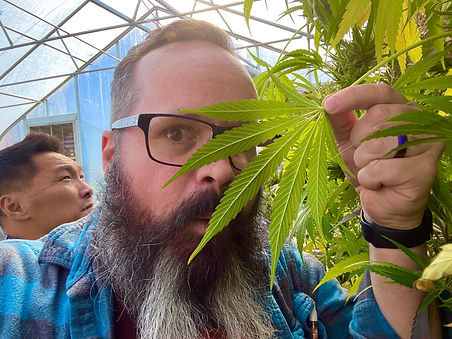

If you’ve made it all the way down here, thank you. Truly. That tells me something important about you— that you care enough about the future of our community and our state to engage deeply, not just skim headlines, slogans, or political theater.
What you’ve read here is not meant to be a document carved in stone. It is a living framework. I will keep building it out as I continue listening to Utahns, learning from experts, refining policy, and responding to the real challenges and opportunities in front of us. Good governance is not static. It grows through evidence, experience, accountability, and dialogue.
At the heart of all of this is a belief that our strength comes from infinite diversity in infinite combinations— from people with different backgrounds, beliefs, talents, identities, and life experiences choosing to build something better together. I do not believe the future should belong to insiders, gatekeepers, or the people with the loudest megaphones. I believe it should belong to all of us.
If this vision resonates with you, I hope you’ll be part of it. That can mean sharing ideas, talking with people in your community, holding me accountable, volunteering your time, or simply staying engaged as this campaign grows. And if you’re in a position to help financially, I hope you’ll consider making a contribution through my ActBlue page. Campaigns like this only grow when ordinary people invest in them, and your donation helps us reach voters, organize effectively, and compete with entrenched power.
This campaign is about building a future that is hopeful, inclusive, future-facing, and grounded in reality— a future that works for all of us, not just the well-connected few. A great big beautiful tomorrow does not build itself. We have to choose it, build it, and fight for it together.
I’m grateful you’re here. And I’d be honored to have your support.
If what you’re reading here resonates, I’d invite you to help keep this work going. True grassroots, non-establishment campaigns don’t survive on big donors or party machinery—they survive because regular people decide this kind of politics is worth backing.
If you believe in this vision and want to help turn it into real representation,
please consider donating $39.39
for Utah House District 39
And if you’re able, making it a recurring monthly contribution is one of the most powerful ways to sustain this campaign over time.
You can click the link below or scan the QR code to donate securely through ActBlue.
Every contribution, especially small-dollar recurring ones, helps keep this campaign independent, accountable, and rooted in the community.